When strangers learn about my South Indian roots, nine out of ten of them will tell me that they love Indian food. Then, in their next breathe, they confess to being overwhelmed by the unusual ingredients and prospect of cooking it. I know where they are coming from having been daunted by the task of selecting fish sauce or olive oil from a dizzying collection of bottles crammed on a store shelf. If it were possible, I would escort each and every one of them down the aisles of my favorite Indian grocery stores, past the fiber-rich lentils, the spunky chutneys, and the mesmerizing array of spices. But alas, it's not. So I've decided to dedicate one post each month to arm my readers with knowledge of the Kerala pantry before they venture out with a shopping list. I'll begin with cardamom.
After the cardamom was harvested and dried, bulging sacks of the spice crowded the hallway of my father's childhood home. Most of it was delivered to S. K. Nadar, a wholesale dealer who possessed the sole license to export cardamom out of South India at the time. The rest found a place in my grandmother's pantry.
 When my parents immigrated to the U.S., they carried along their love of the home grown spice. I grew up eating cardamom in chicken biryani, dry beef curry, and other heavily spiced meat dishes. My mom threw pinches of the potent spice in mung dhal pudding (payasm), pan-fried plantains, donuts soaked in syrup (gulab jaman), and other desserts she recreated from memory.
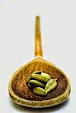
Unless otherwise specified, always buy green cardamom (sometimes referred to as small cardamom) to use in Kerala cooking. It has a complex flavor that compliments both sweet and savory dishes. Look for small football-shaped pods which have a green tint. They should smell like a potpourri of pine and flowers. Avoid black cardamom which has larger brownish pods. It has a less dynamic flavor and is rarely used in Kerala.
 If you need to use cardamom on its own, I recommend powdering it in a mortar and pestle instead of a spice grinder (or coffee grinder strictly designated for spices). The waxy seeds will orbit around the blade of a spice grinder like a carnival goer on a carousel and end up roughly chopped at best. Opt for a mortar and pestle made of stone or marble. The metal versions don't offer any traction. The seeds will slide around and you'll want to pull out your hair.
 To powder the cardamom:
- Pick out the papery husks
- Grind the pebbly seeds

I prefer to use a spice grinder when I grind cardamom with other spices. The spices should fill the grinder's base a third of the way or more. With sufficient traction, the cardamom will not escape the blade.
 Like my mom, I don't bother to remove the papery pods. They powder easily and do not affect the flavor or texture of the spice mix.
If you need to grind a smaller quantity of spices, I recommend either: 1) removing the papery pods, which will otherwise whirl around the blade unscathed and, powdering them in the spice grinder with the other spices or 2) powdering the cardamom in a mortar and pestle first and then adding it to a spice grinder with other spices before grinding them together.
Complimentary IngredientsHere is a list of ingredients I love to pair with cardamom.
Rose water
Cloves and cinnamon
Ginger and cumin
Cashew nuts and coconut
Almonds